

What Is Solana? How Does It Work? Tech Blog
Content
As mentioned earlier, Solana crypto uses Proof-of-history to timestamp the transactions. Every 400ms, Solana blockchain generates a new transaction, Solana uses SHA256 to timestamp them. Currently, there are 27 million Solana coins being circulated around the world.

Bitcoin is the grandpa of all crypto, but the next-gen coins are far superior in technology, and Solana is high on the list of contenders for becoming number one. One advantage is that it is scalable, meaning it can handle a large number of transactions per second . Between the GPU parallelization in this four-stage pipeline, at any given moment, The Solana TPU can be making progress on 50,000 transactions simultaneously. This can all be achieved with an off-the-shelf computer for under $5000. With the GPU offloading onto Solana’s Transaction Processing Unit, the network can affect single node efficiency. It’s definitely possible to write safe Solidity code, just like it’s possible to write complex software in C without memory protection.
Gulf Stream: Solana’s mempool management solution
Remember, one year ago, Solana was a $260 crypto and one of the buzziest names in the blockchain world. Solana may not regain that level in 2023, but I’m convinced that the year ahead is going to be a big one for Solana. Nevertheless, Solana has said it has more than 30 months of runway left, so there’s no need to worry about Solana suddenly burning all its money and shutting down. Moreover, Solana is making significant strides in high-profile, consumer-facing areas where it is easy to track Solana’s progress and hold it accountable for hitting key milestones.
- What might make it less intimidating is if you were able to get some…
- And FTX won’t be the end of the crypto industry,” Multicoin told investors.
- Solana has lower fees, making it cheap for investors to build on.
- Elvis Picardo is a regular contributor to Investopedia and has 25+ years of experience as a portfolio manager with diverse capital markets experience.
- Solana brings users several advantages with its delegated proof-of-stake mechanism.
- We fact-check every single statistic, quote and fact using trusted primary resources to make sure the information we provide is correct.
- The other key difference with Ethereum is that Solana has a ‘stateless’ architecture and, as already discussed above, this helps reduce the overall memory consumption.
Solana is a blockchain platform designed to host decentralized, scalable applications. Founded in 2017, it is an open-source project currently run by Solana Foundation based in Geneva, while the blockchain was built by San Francisco-based Solana Labs. While the protocol could compete against high-profile blockchain projects, it’s still vulnerable to centralization as there are not that many validators of the blockchain. The Gulf Stream refers to Solana’s mempool-less forwarding protocol. A mempool is a cryptocurrency node’s mechanism for storing unconfirmed transactions before they are added to the blockchain.
Latest news
In the blockchain industry, Solana has brought a few innovations. Investing in stocks is among the best ways to grow your investment portfolio over time. Between 1928 and 2023, stocks returned an average of roughly 9.77% annually. Our in-house research team and on-site financial experts work together to create content that’s accurate, impartial, and up to date. We fact-check every single statistic, quote and fact using trusted primary resources to make sure the information we provide is correct.
For Ethereum, that happens once every fifteen seconds, and there’s only so much information that can be fit into a single block. The TDMA-equivalent for blockchain-based networks would be a clock with sub-second granularity that all validating nodes agree on, so that they can more efficiently process transactions. Solana is a blockchain network designed to prioritize the scalability concept. Solana is capable of processing more than 50K transactions per second that is way faster compared to any other blockchain existing at the moment. Solana is a cryptocurrency that runs on decentralized blockchain technology. Solana has been a hot topic among investors following a big jump in share price that garnered a lot of attention in August.
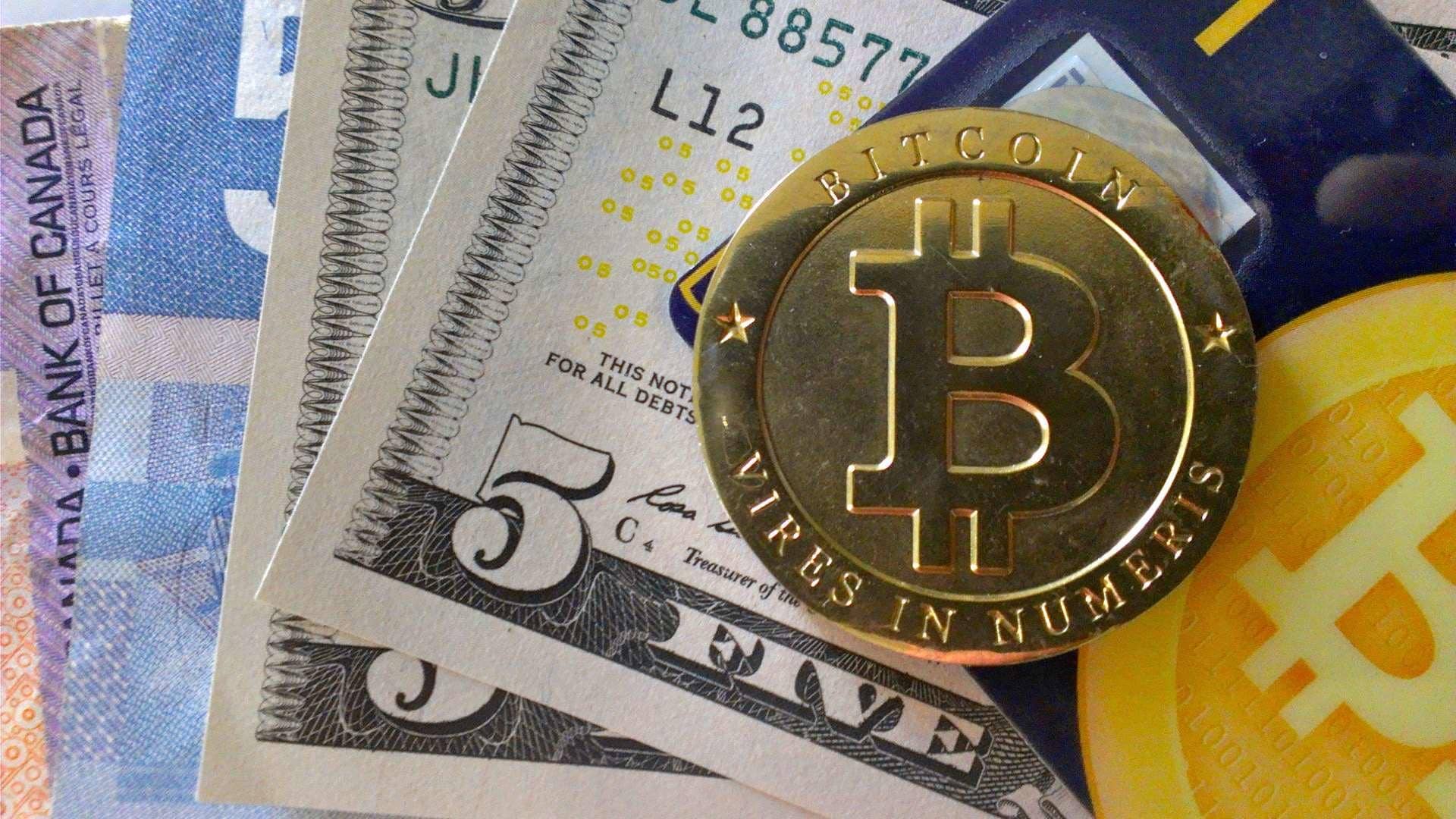
CoinMarketCap is not responsible for the success or authenticity of any project, we aim to act as a neutral informational resource for end-users. The year 2021 also saw an incremental rise in the trading volume on various NFT projects on the ecosystem. Several major art galleries like Sotheby’s also joined in on the fun by listing works of major artists as NFTs. Each blockchain has some incredible features that set it apart. While decentralization is certainly something that Ethereum has always focused on, higher throughput has remained Solana’s focus and has managed to achieve that via its underlying technology as well. Both are decentralized, open-source platforms that allow users to send and receive digital currency, without the need for a central authority.
What Is the Crypto Fear and Greed Index?
It is most noteworthy in its use with cryptocurrencies and NFTs. Solana’s architecture aims to demonstrate a set of software algorithms that eliminate software as a performance bottleneck when combined with a blockchain. The combination enables transaction throughput to scale proportionally with network bandwidth. Instead of validator nodes, Solana uses validator clusters, where groups of validators work together to secure the blockchain and move transactions. Yakovenko surmised that using proof-of-history would speed up the blockchain tremendously compared with blockchain systems without clocks, such as Bitcoin and Ethereum.
The #Solana ecosystem is on fire 🔥! With its cutting-edge technology and thriving NFT market, it's no wonder why it's becoming a top destination for digital asset enthusiasts. Get in on the action and join the future of #DeFi #NFTs 🚀 #crypto
— SeaPhantom (@SeaPhantomNFT) January 31, 2023
Over 2,000 monthly active developers are building on the blockchain. I enjoy writing about the crypto sector and helping educate individuals on potential crypto investments. I primarily look for long-term crypto positions that are undervalued and will outpace the growth of BTC over the years to come. I have been investing in equities for 8+ years and in crypto for over 5 years now.
Sans Bitcoin, the only other serious SCP competitor on this list is Avalanche (AVAX-USD). One key indicator of decentralization is to look at the number of validators on the https://xcritical.com/ network. Unfortunately, since Solana has only been around since 2020, it doesn’t yet possess the decentralization benefits of the behemoths Bitcoin, Ethereum, Cardano.
Solana price analysis: Recent developments and further technical indications
Anatoly Yakovenko, a former contributor to Qualcomm and Dropbox, founded and announced the platform in 2017 when he published the Solana whitepaper. He is a software engineer with experience in compression algorithms and distributed systems. Developers raved about Solana’s support for smart contracts, pieces of code that execute pre-programmed directives, as well as an innovative proof-of-history consensus mechanism. Yakovenko and Gokal started Solana in late 2017 with the vision of creating a future that prioritizes fair access to finance, freedom, and security through blockchain technology. The mainnet was launched in beta less than three years ago, and since then the Solana ecosystem has continued to grow and evolve.
As the network ages, more stakers/nodes are onboarded into the project, and the wallet distribution becomes more even as early investors sell, and new ones buy in. The hold distribution of Solana holders is also far from perfect. Typically, a hold distribution like this is a cause of concern, but most of these addresses are from VCs that will sell as time goes on and will likely not be malice to the project. The current hold distribution is accredited to Solana’s youth and will only improve in due time.
DeFi Ecosystem
“Solana is a decentralized computing platform that uses SOL to pay for transactions. Solana aims to improve blockchain scalability by using a combination of proof of stake consensus and so-called proof of history. As a result, Solana claims to be able to support 50,000 transactions per second without sacrificing decentralization, what is solana crypto and is one of the largest proof of stake blockchains by market cap. Solana is a permissionless, high-performance blockchain that offers scalable, fast, and decentralized marketplaces and apps. It creates new technology that enables users to have smart contracts, speedy transactions, and security at the enterprise level.
Solana’s outages have frequently resulted in the value of the network’s native Sol token falling. One of Solana’s big breaks came in August 2021, more than a year after Solana launched when Degenerate Ape Academy became the first major NFT project on the Solana NFT marketplace. During the first three weeks of that month, Solana’s price jumped from around $30 to $75 in value. Solana works on a combination of proof-of-history and delegated proof-of-stake protocols. However, this proof-of-work system is slow and resource-heavy, leading to the use of tremendous amounts of energy.
It is important to do your own research and analysis before making any material decisions related to any of the products or services described. This article is not intended as, and shall not be construed as, financial advice. The views and opinions expressed in this article are the author’s [company’s] own and do not necessarily reflect those of CoinMarketCap.
Solana History
Solana supports experiences for power users, new consumers, and everyone in between. You can find solana exchange rates on specialized cryptocurrency websites. This changed following FTX’s collapse in November when it became known that the project’s private keys were held at the crypto exchange. This process is not cheap, and this is why Ethereum 1.0 is considered to be slower than other ‘stateless’ blockchains like Solana. However, we have spun it up on many instances to over 200 physically distinct nodes across 23 data centers on AWS, GCE, and Azure for benchmarking. The process of transaction validation on the Solana network makes extensive use of an optimization common in CPU design called pipelining.
2/14 The Solana space is good, still it is fragile. The technology is great but there are not many top collections that can propose something else than their hype or draining wallets through casinos. pic.twitter.com/CtFK7imfIs
— Defil🟠gist+.sol (@defilogist) January 30, 2023
The outages were concerning enough for a protocol that sought to upend ether’s dominance and assert itself as a stable, rapid platform. The project was first built in 2020 and is a younger protocol than ether, which went live in 2015. Solana soared over the course of 2021, with a single token gaining 12,000% for the year and reaching $250 by November. Yet even before the collapse of FTX, Solana faced a series of public struggles, which challenged the protocol’s claim that it was a superior technology. During the crypto market’s heyday in 2021, Bankman-Fried was hardly alone in his bullishness. Solana has since come off the lows, with a market cap now crossing $3.5 billion.
You can learn more about GOBankingRates’ processes and standards in our editorial policy. Still, investors need to weigh the pros and cons of Solana as they consider their cryptocurrency portfolio as a whole. Investors should treat Solana as a long-term investment instead of a get rich quick scheme.
Key Takeaways
This allows validators to reduce confirmation times, execute transactions ahead of time, and reduce the memory load coming from the unconfirmed transaction pool. Gulf Stream enables Solana to reach 50,000 transactions per second. Consider Ethereum’s comparatively low tps and the large number of smart contracts. The network is slow, has huge transfer fees, and has a huge carbon footprint, as it still operates on the proof-of-work consensus.